AC Repair Help for Homeowners
Request an estimate from a local provider
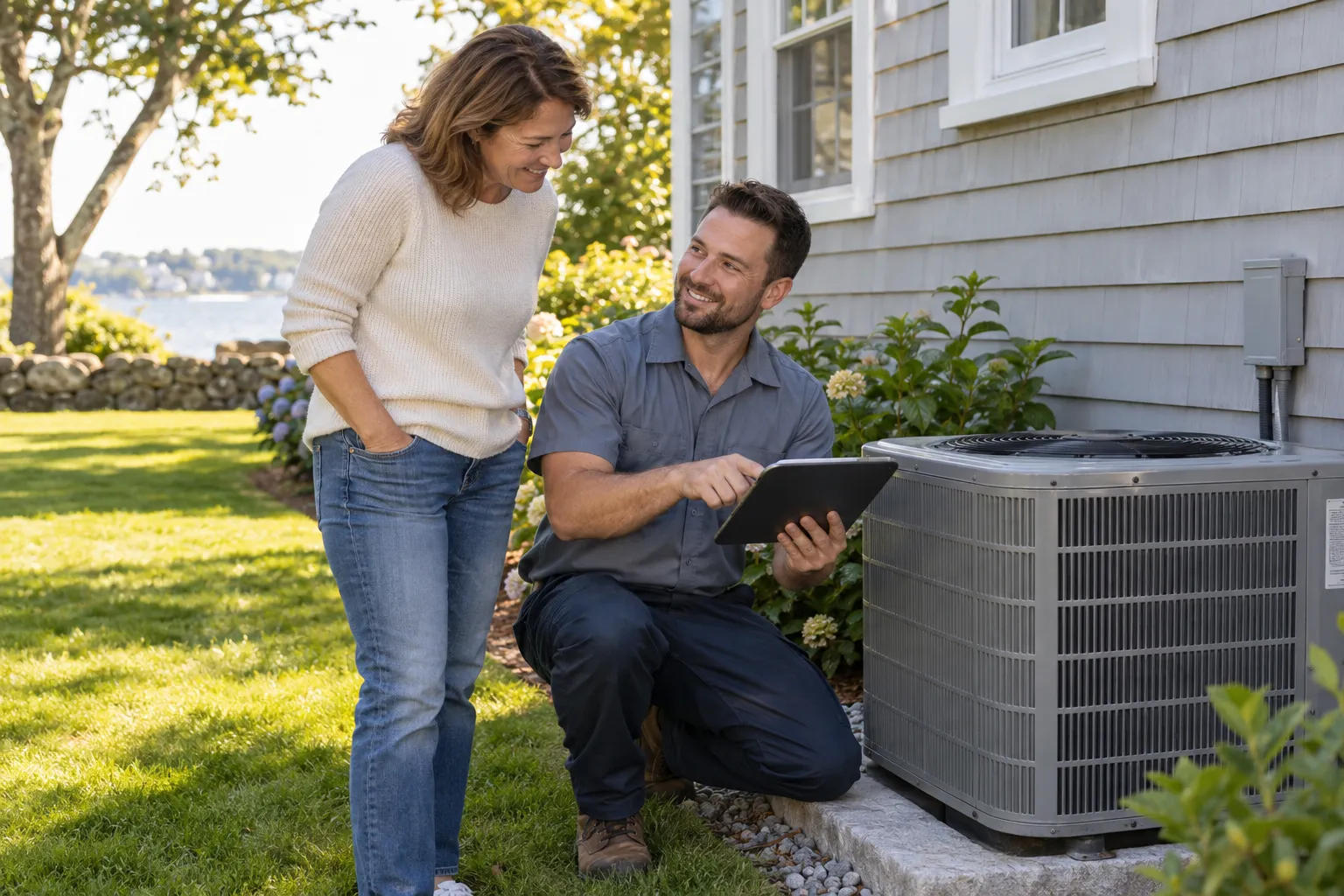
An air conditioner does not make cold air. It moves heat from inside your house to the outdoors, and a problem anywhere along that path can leave you warm and confused. Meindependence Heating & Air is a referral service. We do not do the repair work. We connect homeowners with independent providers in our network who diagnose the problem and fix it.
This page explains why AC problems happen, what a repair visit looks like, and how to tell a simple fix from a bigger one. It also covers what to do after the repair, because the goal is not only to fix it but to keep it from happening again. Along the way, you will learn how to keep photos and notes so estimates go smoothly.
AC Not Cooling? Start With These Checks
Think of your AC like a table lamp. Before you blame the wiring, you check the bulb and the plug. Start with the thermostat. Make sure it is set to cool and a few degrees below the room temperature. Next, look at the breaker panel for a tripped switch. Then check the air filter, because a clogged one can choke the whole system.
Switch It Off If You See Ice or Smell Burning
Ice on the refrigerant pipes or the indoor coil means something is off. Turn the system off at the thermostat and let the ice melt. Running it while iced over can strain the compressor. A burning smell or a loud grinding sound is also a reason to shut it off and ask a provider for help.
When It Counts as an Emergency
Emergency AC repair makes sense when the heat is a health risk, such as for babies, older adults, or anyone with a medical condition. Request a callback to check provider availability. Many providers can respond quickly, but hours vary, so ask what is open to you.
Common Signs Your AC Needs Repair
Your AC gives hints before it quits, much like a warning light on a car dashboard. Watch for these:
- Air from the vents feels warm or only slightly cool
- Airflow is weak, even with a clean filter
- The system starts and stops again and again
- Water pools near the indoor unit
- Buzzing, rattling, or squealing noises
- Energy bills climb with no change in habits
Why You Get Warm Air
Picture a sponge that soaks up heat inside your home and gets wrung out outdoors. Refrigerant is that sponge. If there is a leak, the sponge is too small to do its job. A dirty coil or a failed fan can also stop the heat from leaving, so the air stays warm.
Why It Keeps Turning On and Off
A runner who sprints a few steps, stops, and sprints again gets worn out quickly. Short cycling is the same idea. It can come from a dirty filter, a failing part, or a thermostat issue. The wear adds up, so it is worth having checked.
What Happens During an AC Repair Visit
A good visit follows a clear path. The provider asks what you noticed and when it started. Then they inspect the indoor unit, the outdoor unit, and the airflow. They test electrical parts and check refrigerant pressure. After that, they explain the cause in plain words and give you a written quote before any larger work begins.
Build a Home File Before They Arrive
Keep a home file for your system. Take photos of the outdoor unit, the indoor unit, and the label with the model number. Jot down the symptoms, the dates, and any sounds. Save past invoices too. If storm damage or a power surge may be involved, some policies may cover sudden damage, so check your policy. Providers can often help document damage for a claim.
Common AC Repairs
Many cooling problems come down to a small part. Here are some repairs providers handle often:
- Capacitor: helps the motors start, like a battery for a push
- Contactor: the switch that sends power to the outdoor unit
- Fan motor: moves air across the coils
- Refrigerant leak: a leak is sealed or repaired, then the system is refilled
- Thermostat: replaced or recalibrated when it misreads the room
- Compressor: the heart of the system, and the costliest part to fix
Drain Line Clogs, Explained
Your AC pulls moisture from the air, and that water leaves through a drain line. It works like a rain gutter. When leaves of slime and dust build up, the water backs up. In homes with full basements, a clogged line can leave a damp spot near the indoor unit.
Weather Wear on Outdoor Units
Coastal storms can blow debris into the unit and cause power surges. Snowmelt and repeated winter thaw cycles can shift the pad the unit sits on, which strains the lines. In older homes, tight utility rooms can also trap heat around the equipment. Photos of any damage help the provider and any insurance conversation.
Repair or Replace?
Think about an older car. One repair makes sense. A fifth repair in two years starts to feel like a money pit. Ask the provider about the age of the system, the repair cost compared with a new unit, and how often it has failed. Systems past 10 to 15 years often lead to this talk. If heating and cooling both feel tired, or you are searching for furnace replacement near me, mention it so the provider can look at the whole setup.
Fix It, Then Protect It
A repair solves today's problem. Maintenance keeps the next one away, like brushing teeth after a filling. Try these habits:
- Change or wash the filter every one to three months in cooling season
- Keep two feet of space clear around the outdoor unit
- Rinse dust and pollen off the outdoor coil gently with a hose
- Pour a little water into the drain pan area to watch for slow draining
- Book an HVAC service tune-up before the cooling season starts
Winter Care for a Resting AC
Cold, snowy winters are hard on idle equipment. Brush heavy snow off the outdoor unit and keep ice from building up around it. Do not wrap it tightly in plastic, since that traps moisture inside. A breathable cover or a quick check in spring is usually enough.
Questions to Ask the Provider
A few clear questions help you feel in control:
- What caused the problem, and how can I prevent it?
- Is the quote in writing, and does it list parts and labor?
- Is there a warranty on the parts or the work?
- Are you licensed and insured in my state?
- What upkeep should I do after the repair?
Keep the Paperwork After the Visit
Add the invoice to your home file. Take a photo of the finished work and the new part labels. Write down the date and what the provider told you. These notes make the next estimate quicker and help if you ever file a claim.
Ready to Get Help?
You do not have to figure this out alone. Share what you see, and a provider in our network can take it from there.
What's Included
Cooling Diagnosis
A provider checks airflow, electrical parts, and refrigerant pressure to find why your home is not cooling properly.
Part Repairs
Failed capacitors, contactors, and motors are repaired or replaced when needed.
Written Quote
You get the cause explained and a written quote before any larger work starts.
Prevention Advice, Not Pressure
Providers can suggest simple upkeep habits so the same problem is less likely to come back.
What AC Repair Typically Costs
Prices vary a lot by home, brand, and the part that failed. These are typical U.S. ranges, not quotes. Always ask the provider for a written quote that lists parts and labor before work begins.
| Item | Typical range | Notes |
|---|---|---|
| Diagnostic visit | $75 – $200 | Often applied toward the repair, so ask |
| Capacitor replacement | $120 – $450 | Common, small part |
| Contactor replacement | $150 – $400 | Switch that powers the outdoor unit |
| Condensate drain clearing | $100 – $300 | Price depends on access |
| Fan motor replacement | $300 – $900 | Indoor or outdoor motor |
| Refrigerant leak repair and refill | $200 – $1,500 | Depends on leak location and refrigerant type |
How It Works
Share What Happened
Tell us what you noticed, such as warm air, odd noises, or water near the unit, and when it began.
Get Matched Locally
Meindependence Heating & Air connects you with an independent provider in our network who serves your area.
Review the Quote
Ask for the cause, the options, and a written quote before work.
Fix It and Protect It
After the repair, follow the upkeep tips and update your home file.
Why Call Meindependence Heating & Air
Plain Explanations
Providers in our network can explain why the problem happened, so the repair makes sense before you agree to anything.
Local Providers
You are matched with independent providers who work in your area and know the local climate.
Prevention Focus
Good advice goes beyond the repair and covers upkeep that helps the fix last longer.
Organized Records
Photos and notes in your home file make estimates and any claim easier to handle.
Other Services
Need ac repair in Brewster?
Tell us what your cooling system is doing. Request an estimate or ask for a callback, and a provider in our network can follow up with next steps.
No obligationAC Repair FAQ
Why is my AC running but not cooling the house?
Common causes include a dirty filter, a dirty coil, low refrigerant, or a failed fan or capacitor. Check the thermostat and filter first. If air stays warm, a provider can find the cause.
Is it okay to keep running my AC if it is freezing up?
It is better to turn it off and let the ice melt. Running an iced-over system can strain the compressor. Then ask a provider to find why the ice formed.
How do I know if I should repair or replace my air conditioner?
Consider the age, how often it breaks, and the repair cost compared with a new unit. Systems over 10 to 15 years old with repeated repairs are often worth comparing.
Reach a local provider
Tell us what your cooling system is doing. Request an estimate or ask for a callback, and a provider in our network can follow up with next steps.
No obligation